
/
1
2
3
4
5
6
7
·
·
·
·
·
·
·
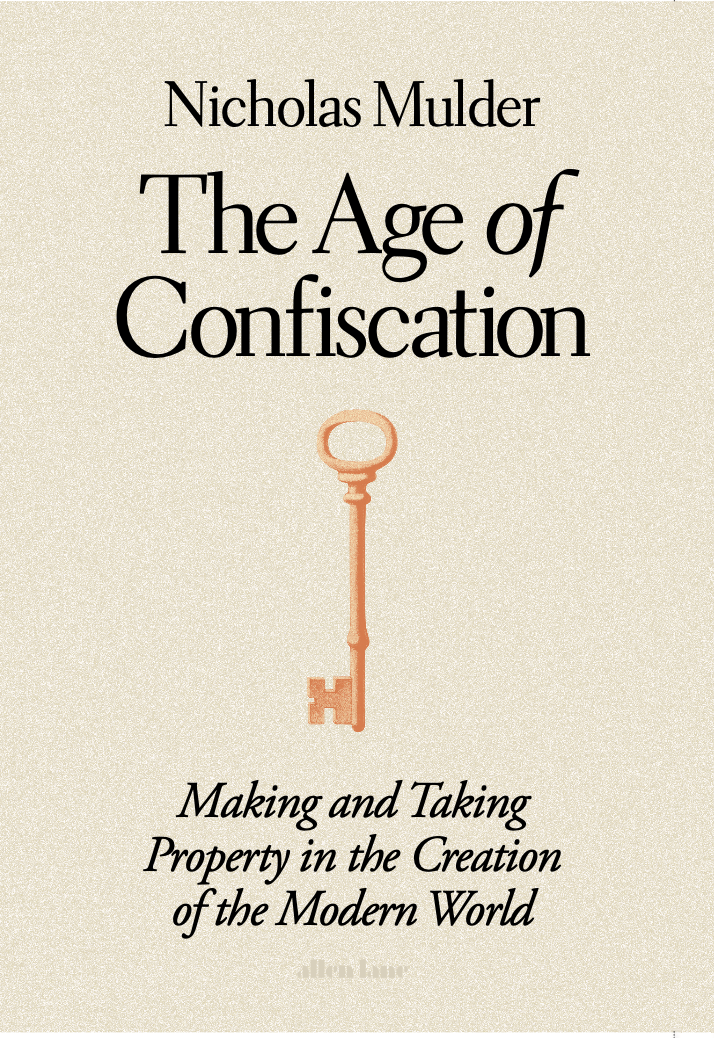
The Age of Confiscation: Making and Taking Property in the Creation of the Modern World
Out in October 2026 with Allen Lane (UK) and December 2026 Little, Brown (US).
Order here:
Expropriation – the forced transfer of property rights – is usually associated with dictators, unstable countries and violent revolution. But in fact, it has been integral to the political and economic history of the West, enabling everything from the abolition of serfdom and slavery to industrialization, the rise and fall of colonial empires, and the strengthening of the welfare state. For better and for worse, much of our modern world was built through coercive acquisition of property.
In this groundbreaking international history of expropriation, Nicholas Mulder charts a novel path from the eighteenth century to the present, ranging from the French Revolution to the Russo-Ukrainian War, from colonial companies to railway empires, from sales of church land to oil nationalizations, and from the confiscation of patents to asset freezing in the Eurodollar market. He shows how all kinds of political movements – liberal and nationalist, socialist and fascist, imperialist and anticolonial – both dissolved and redistributed property rights. Successful state-building and economic development involved mastering the powers of the confiscatory state and redeploying them for new purposes.
Drawing on a vast range of sources and data across history, politics and economics, Mulder unfolds a fresh account of how property was made and unmade, transferred and converted, stolen and restored. The Age of Confiscation reveals the extent to which expropriation has been part of our recent past, and how, amid rising geopolitical competition, growing inequality, and climate change, it will mark our future.
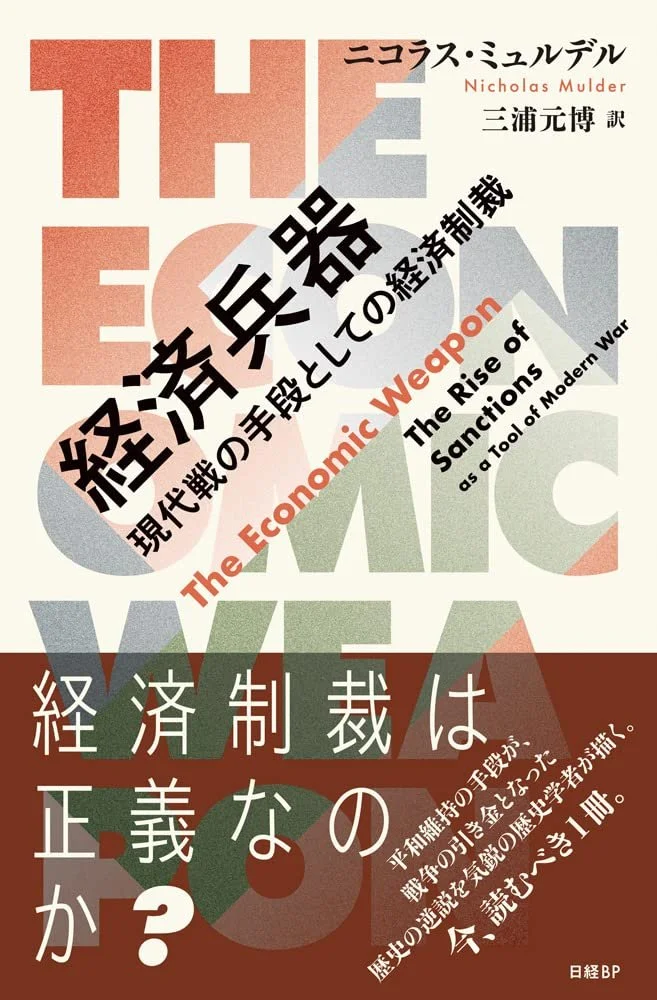
The Economic Weapon: The Rise of Sanctions as a Tool of Modern War
A Foreign Affairs and The Economist Best Book of 2022
Winner of the 2023 Stuart L. Bernath Book Prize of the Society for Historians of American Foreign Relations and the 2024 Paul Birdsall Prize in European military and strategic history of the American Historical Association
Published by Yale University Press (2022)
Order here via:
Reviews of The Economic Weapon:
“Valuable . . . offers many lessons for Western policy makers today.”—Paul Kennedy, Wall Street Journal
“Lucidly written, scholarly and thought-provoking.”—Gideon Rachman, Financial Times
“A fascinating new book. . . . Taken as a superbly researched work of history, it lights up key aspects of the twentieth century in a deeply thought-provoking way.”—Noel Malcolm, Daily Telegraph
“Original and persuasive analysis. . . . For those who see economic sanctions as a relatively mild way of expressing displeasure at a country’s behavior, this book, charting how they first emerged as a potential coercive instrument during the first decades of the twentieth century, will come as something of a revelation.”—Lawrence D. Freedman, Foreign Affairs
“Terrifyingly relevant.”— New York Times’s “The Ezra Klein Show”
“Nicholas Mulder has succeeded admirably here in rescuing the historical origins of sanctions from relative obscurity. . . . Mulder’s thoroughly researched and intelligent assessment of the history of sanctions should be required reading for anyone contemplating Russia’s new aggression.”—Richard Overy
“The Economic Weapon is a superb account of the history of sanctions, and their profound impact on international politics. Although sanctions were once heralded as a force for peace, Mulder shows they often fail and sometimes make war more likely or even produce a humanitarian nightmare.&rdquot;—John Mearsheimer, author of The Great Delusion: Liberal Dreams and International Realities
“This is a tour de force of historical research and argument. With great subtlety and richness, Nicholas Mulder transforms our understanding of twentieth-century global and international history.”—David Edgerton, King’s College London
“Mulder reveals the history of liberalism’s ultimate weapon. An essential contribution both to scholarship and to the present-day debate on economic sanctions.”—Adam Tooze, author of Shutdown: How Covid Shook the World’s Economy